
A Girls’ Soccer Clinic Kicks Off in Dumaguete
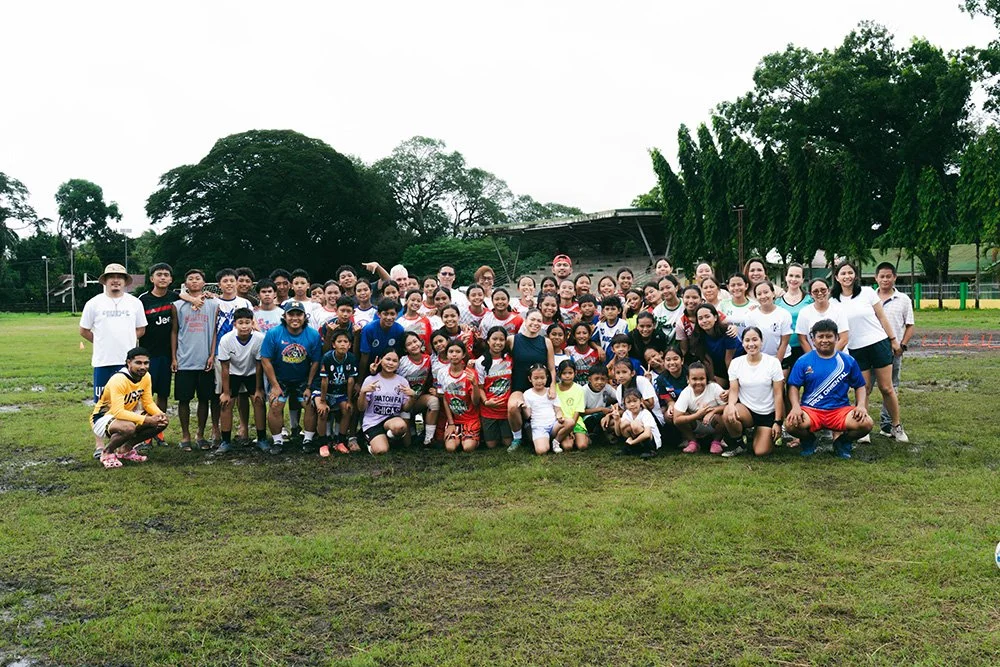
Siaton FC Soccer Clinic
I made one three years ago, the very first time I visited Dumaguete. I had just crossed the Pacific Ocean, wedged in the middle seat between my Lola and my father. I was exhausted, my body aching and heavy with the weight of what had been the most exhilarating weeks of my life, representing the Philippines for the very first time on the world's biggest stage, the FIFA Women’s World Cup.
The plane landed in the long shadow of that tournament. In some ways, it was still looming over me, coloring every waking thought with its memory. I was caught in a loop of reliving and processing. But after I passed through baggage claim, I was met with something that jolted me, catapulting me into the immediacy of the moment. In the parking lot outside the airport stood a group of young women, local footballers between the ages of eight and eighteen, buzzing with excitement.
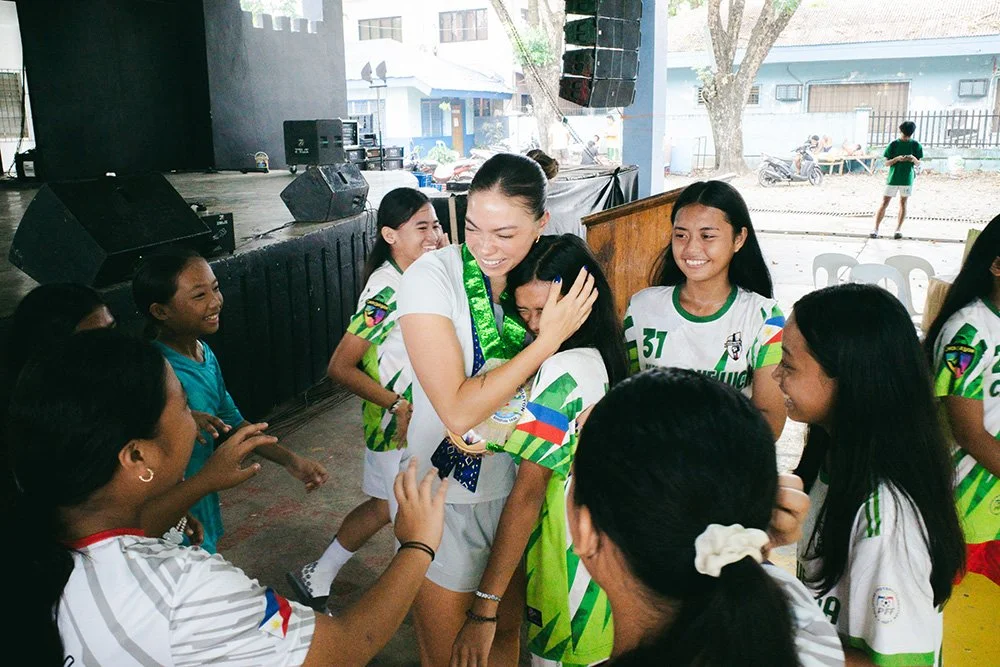
Soccer Camp Participants welcoming Reina Bonta
They wore Philippines football jerseys, sang our chants, and thrust clever, hand-painted signs toward the cloudless blue sky. A live band played on a simple stage—an elevated truck bed. They draped leis around my neck, pressed handwritten notes into my arms, and embraced me with warmth and pagtanggap (acceptance), a truly Filipino homecoming. There, in the parking lot of the one-carousel Dumaguete airport, I forged my promise: that I would return and show these aspiring footballers the same love and respect they had offered me so freely.
In the three years that passed between that moment and today, as I continued to reflect on the deeper personal and cultural significance of the tournament, I made a 15-minute short film about my team’s debut at the World Cup, told through the lens of my tender relationship with my Lola. The film, titled Maybe It’s Just the Rain, speaks of how our opportunity as a diasporic national team to raise the Filipino flag on the world’s biggest stage is owed to our elders, who walked through fire so we could stand where we do now.
As I began the journey of sharing that film, bringing it from Cannes Marché du Film in France to DOC NYC in New York, the young, inspiring women who had welcomed me at the airport never left my mind. Their faces, generosity, and belief stayed with me as I rounded every corner of the film festival circuit.
So, in an effort to bring the film—and an experience worthy of their welcome—back to their doorstep, I launched an impact campaign for Maybe It’s Just the Rain. Entirely separate from film festival premieres or awards conversations, this phase of the film’s life cycle was rooted in community. The screenings and related activities were designed to create moments of connection for Filipino American and Filipino audiences and for young, primarily female athletes who grow up fighting tooth and nail within systems never built to lift them up—or even make room for them.
Tapping dear friends, family, and like-minded institutions with service-forward philosophies—among them Philippine International Aid and Lululemon—to gather resources, I hatched a two-day soccer clinic for the very community of young girl footballers in Dumaguete and Siaton, whom I hadn’t stopped thinking about since the day we first met. Before I knew it, I was greeting them at the airport under a familiar cloud of muggy Dumaguete heat once more.
The days that followed were a whirlwind of joy and mutual respect.
I arrived at an open-air auditorium. As I stepped out of the car, a swell of bright, tinkling laughter met me: young players leaping up and down or shyly hiding behind friends’ shoulders. The space itself was alive with color—a concrete basketball court washed in fading blues, reds, and yellows, its court lines guiding the eye like a red carpet toward the stage.
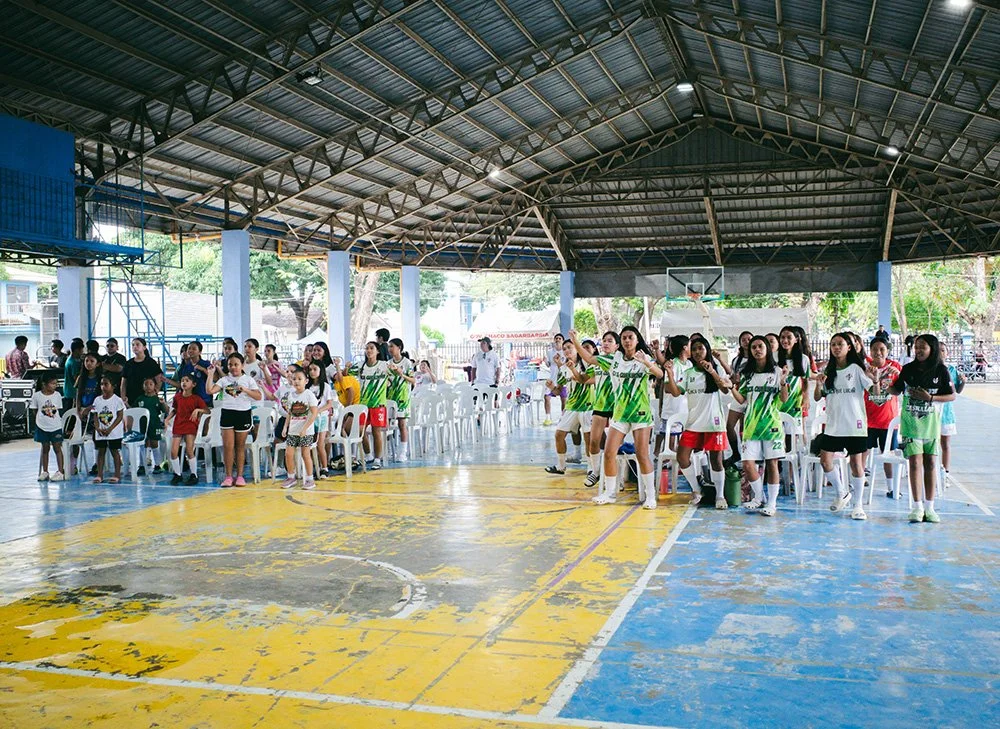
The young participants at the Open-air auditorium in Siaton
A welcome ceremony unfolded in which I, having come believing I was there to offer something, was instead met with extraordinary generosity once again. I was honored with a traditional Siaton dance, a ten-foot-tall bamboo stick that we pounded on the floor to release a small flood of water, and even a live chicken, all profound gestures of hospitality.
After opening remarks by the Mayor of Siaton and my collaborators Cobbie, Prin, and Alexa—locals who were the advance team in our organizing effort—I introduced Maybe It’s Just the Rain. It was projected on a massive screen behind the stage, its sound echoing off the bleachers and spilling into the surrounding streets like an invitation for neighbors and pedestrians enjoying Saturday strolls to join us. One of the older girls I had met at the airport back in 2023 sat wiping a steady stream of tears from her cheeks. “It reminded me of my Lola,” she later told me.
We jumped into a caravan of cars, vans, and bicycles and, less than ten minutes later, arrived at an expansive soccer pitch. It was beautifully imperfect, marked by empty patches where grass no longer grew—where teams warmed up or goalies stood, raking their cleats into the ground. The nets in the soccer goals, split by the wear and tear of time, had been carefully retied.
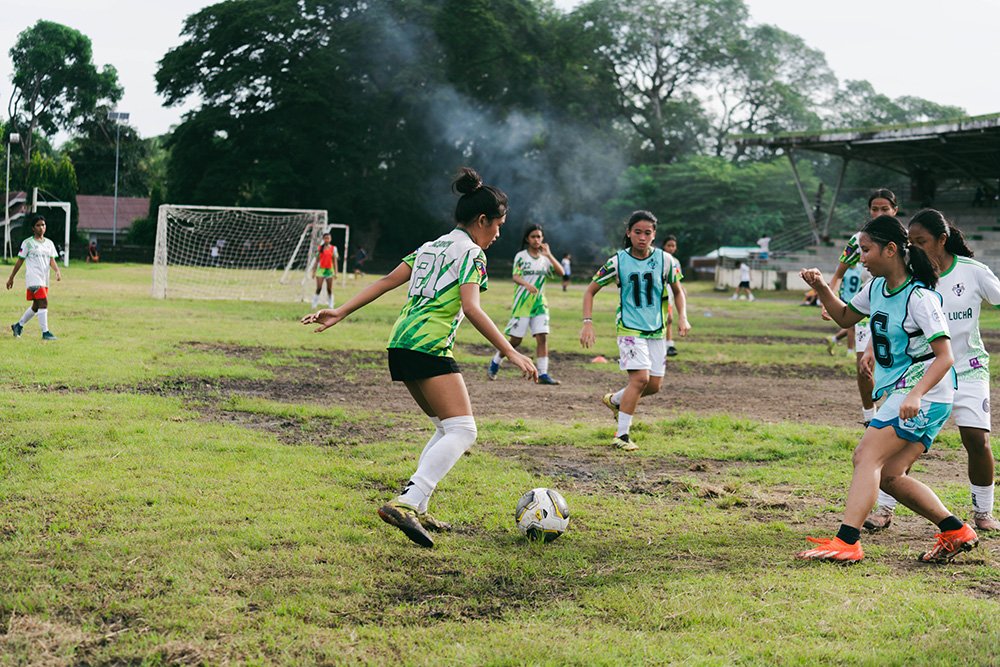
Soccer camp participants on the imperfect football pitch
“The coaches came here in the middle of the night and trimmed the field to prepare it for the clinic,” Cobbie whispered to me. “They don’t have a lawn mower or grass cutter, so they did it by hand, with shears.” I think about this, and each individual blade of grass, often.
I brought along a professional photo and video team from Manila, with the intention of capturing memories the girls could return to. We set up a simple photo corner with a backdrop, where each player could pose and take home professional-style headshots—images they could use for recruitment or to elevate their media presence. We then formed a wide, lopsided circle, linking our hands. One of the coaches led a prayer in Cebuano. I asked the players to “popcorn” intentions for the training, a ritual adopted on the National Team some time ago.
“Focus.”
“Open-mindedness.”
“Patience.”
“Courage.”
And we were off.
Training unfolded in two long periods, with a break for lunch and naps under the palm trees that circled the field. During the breaks, a handful of girls stayed on their feet with me, juggling the ball in small constellations. They riddled me with questions:
“What’s your favorite color?”
“Brown.”
“When are you coming back to the Philippines?”
“As soon as I can.”
“Yay! Next week?”

Girls doing drills and asking Reina questions
At the end of the session, brand-new Lululemon water bottles were passed around as tokens. In a province where so many of the girls scrape together pesos just to take the public bus to training, one of their biggest challenges is affording accessories like reusable water bottles or shin guards to sustain a season of soccer. I layered in details like structured warm-ups and cool-downs, post-match interviews, and conversations about gear sponsors. These were small touches, meant as a glimpse into the minute rhythms and traditions that make up parts of life as a professional footballer, framed not as unattainable fantasies but as very real possibilities.

Girls getting their Lululemon water bottles
On the second day, warnings of an incoming typhoon rippled through the group. Soon after, the air thickened and the sky shifted colors. It didn’t dampen the group’s spirit. I was once again surprised. The girls trained on, laughing into the wind, unafraid and sliding belly-first across the shallow pools that began to fill the field.
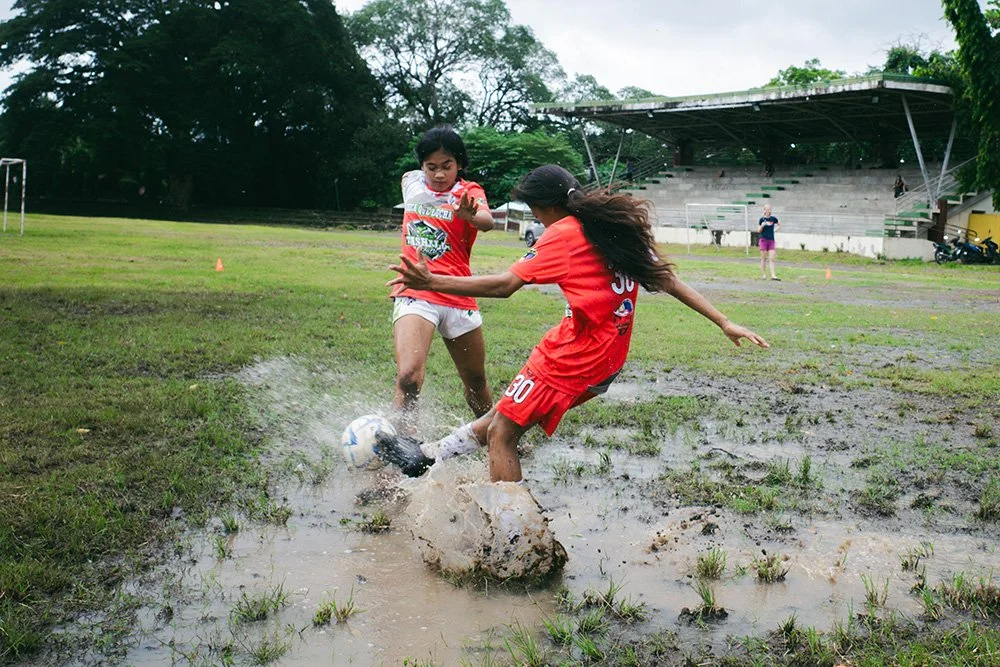
Girls still toughing it out on the muddy fields.
We closed with a simple ceremony. As the girls gathered cross-legged in front of me, I took the opportunity to ask questions, listen, and gently loosen the familiar hierarchy that exists between coach and player. What emerged was tenderness. The oldest participant spoke through tears. She shared that, as the eldest of six, she spends much of her life caring for her youngest siblings, and that soccer was the ephemeral paradise she goes to in order to breathe. Her words left all our cheeks glistening. They placed a clear glass bottle in my hands. Inside were folded pink, blue, and yellow Post-it notes with carefully written messages from every player. I held the bottle gently, knowing it contained far more than paper.
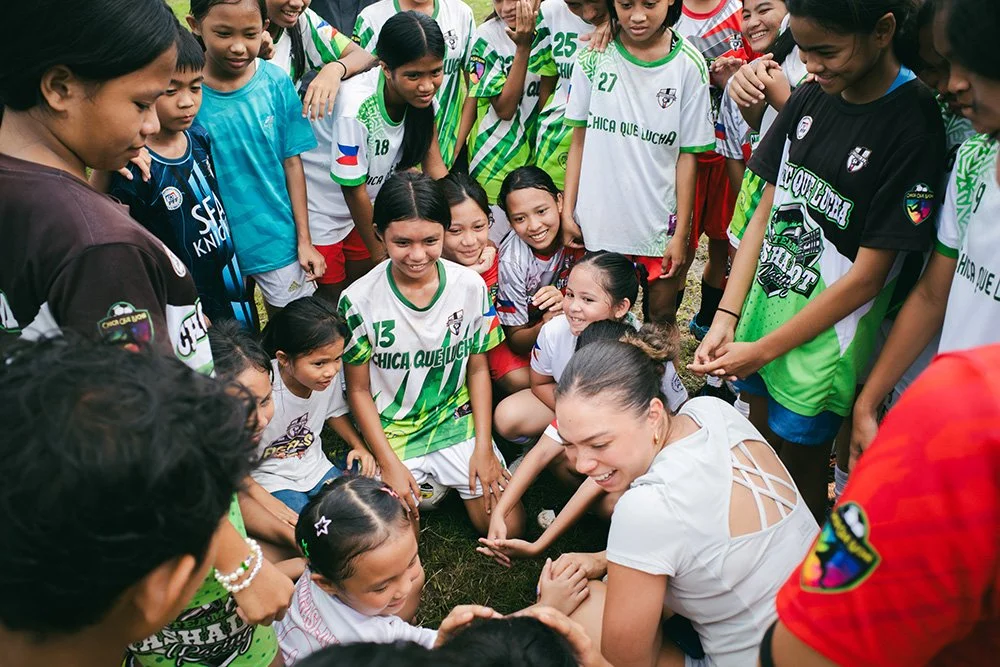
Girls with Reina Bonta after camp
A welcome ceremony unfolded in which I, having come believing I was there to offer something, was instead met with extraordinary generosity once again.
Just this past December, my wife, Brena, and I were married in Brazil. She plays professional soccer for Palmeiras and represents the Brazilian Women’s National Team. The news made the girls leap in the air and giggle. Since our clinic, a few other communities have reached out to me, hoping to replicate what we were able to do in Siaton. We’re now considering a traveling clinic in the Philippines—one that could carry onward this exchange of belief and care.

Reina Bonta is an award-winning filmmaker and professional soccer player.


No comments