
A Baritone Begs to Differ with Mr. Chalamet
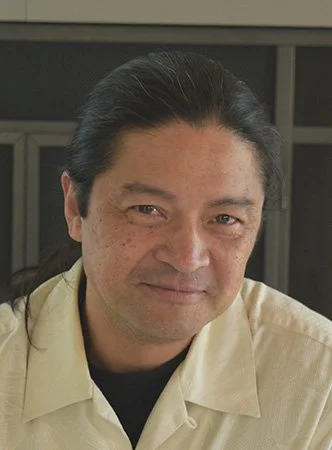
Baritone opera singer Roberto Perlas Gomez
While the media consensus was that the young striver should have stayed in his lane, his comments on ballet and opera ignited a debate about whether the validity of an artform should be determined by economics and relevance today or by aesthetics and tradition.
To Chalamet’s point, a major reason opera is seeing falling attendance is the unaffordability of tickets. Government support has always been essential to sustain opera companies. Paris Opera has received public subsidies since its founding in 1669 during Louis XIV. Public subsidies for Paris Opera continued after the French monarchy was replaced by democracy, and is still heavily subsidized by the French government. When opera companies are viewed as public institutions, the need to preserve them has wide acceptance.
In America, it is more than a notion that opera, as an art, is stagnant in funding and creativity. Opera-goers vastly prefer classical operas that originated in Europe before the 20th Century to new opera productions. Preservation of a performance art must then be justified by the same rationale by which civil societies preserve visual arts, such as paintings by deceased artists. For every masterpiece like Mona Lisa, there are a hundred gems on canvas most people will never see. The public is inclined to think favorably of art they haven’t encountered based on their impressions of art they have experienced. Museums count on this general appreciation of art. Likewise, when a devil’s advocate argues that most defenders of opera have seen few if any operas. To defend opera on principle isn’t as irrational as it sounds.
Take Chalamet’s profession as an example. Citizen Kane is widely regarded as the greatest achievement in cinema, but many of the people who perpetuate this opinion do so without having seen the Orson Welles classic or they saw glimpses of it on TV while they were layering pasta between ricotta and eggs for a night of lasagna.
Citizen Kane was a box office disaster in 1941. Avatar (2009) is the most popular movie of all time, yet the world would be diminished if all copies of Citizen Kane vanished. The same goes for Bizet’s La bohème. Just as Citizen Kane was inspired by the corrupted American dream of publishing tycoon, William Randolph Hearst, La bohème was inspired by the poverty of struggling artists in Paris. History becomes a shelf of dusty old facts until its truths are distilled and given immortality through art and imagination. Good opera revisits past events that are settled; it doesn’t interpret today’s headlines. It’s for people who desire a respite from modern madness.
Great works of art inspire future works of art. Composers are still presenting new works, and some are in English, such as Nixon in China; X, the Life and Times of Malcolm X; Harvey Milk. The Metropolitan Opera is staging a traditional Tosca in 2026, but it is also doing Lincoln in the Bardo. Carmen, La traviata, and Madama Butterfly were initially, panned by critics and were box office disasters. New works take time and committed audiences to become classics.
It is a challenge to motivate the public to keep opera alive because of the commitment and education demanded to become enthralled by drama and emotions communicated in a foreign language.
Views of an Opera Singer
Meet again Roberto Perlas Gómez, 63, a baritone opera singer who understands Chalamet’s candor but hasn’t given up hope. For almost 40 years, he has been bringing audiences the full spectrum of emotions.
Gomez is a guest soloist with The Verdi Chorus for performances of Verdi in España Concert on April 18th and 19th, 2026 at First Presbyterian Church, in Santa Monica. Positively Filipino readers met Gómez in 2023.
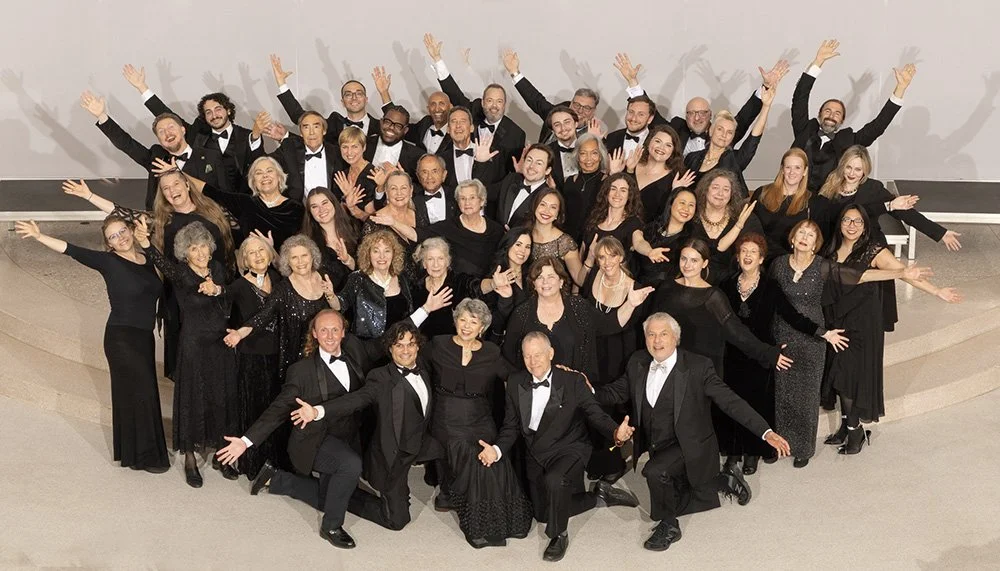
The Verdi Chorus
“Chalamet (age 30) is a kid who doesn’t get why ballet and opera are important. A convincing case for the importance of ballet hasn’t been made for his generation,” admits Gómez.
“Back in 1900,” he goes on, “opera was the number one form of entertainment in the world. It wasn’t just for elites. The working class understood it, too. They were listening to it every week on radio and on records.”
In today’s culture, mainstream movies by comparison are easier to grasp. “When I turn on a Marvel movie, I know there’s going to be lots of great effects and wonderful fight scenes. It’s easy to pick that up.”
He is happy to be alive today, though his vocal talent would have had a larger audience 120 years ago. “People were going to see tenors like (Enrico) Caruso,” Gómez says of the voice on his family’s record player that mesmerized him at age seven. “Even though they didn’t understand Italian and didn’t have subtitles, they were absorbed by the emotion of it. In their imaginations, they could see the drama that was going on. And they could hear it on a record, too.”
Wealthy industrialists were also drawn to arias. “Back in the turn of the nineteenth century, the arts were heavily supported by the industrialists and financiers like the Rockefellers, Astors, Vanderbilts, Andrew Carnegie, and J.P. Morgan.”
He says the priorities of today’s tech billionaires are different from early 20th Century industrialists. “We should have (Warren) Buffett, (Bill) Gates, (Mark) Zuckerberg, and (Elon) Musk contributing to opera, but none of them are. Whether it’s the fault of opera companies or performers, it’s just not happening.”
But for some wealthy donors, a shift toward humanitarian causes is relatable. “It’s hard to make the case for endowing an opera hall when Gates is trying to provide clean drinking water to areas of Africa with poor infrastructure and are drought-stricken.”
Opera saw a brief resurgence in popularity from the 1970s through the ’90s. “The last time opera was funded well was when Luciano Pavarotti was at his peak and Placido Domingo was in his ascendency,” he says of the two tenors that dominated opera during his youth. Gómez contrasts those glory days with the Great Recession of 2008 when Opera of the Pacific faded into the sunset with a final performance of The Barber of Seville.
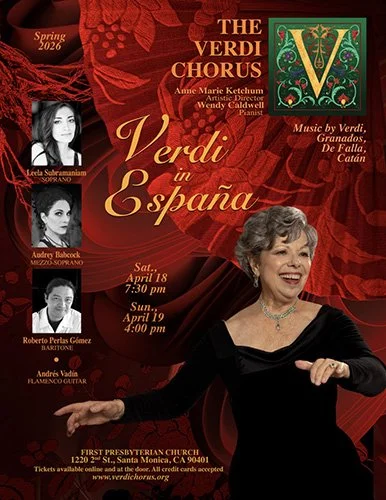
“Verdi in España”
The Verdi Chorus has private support but also public funds from the Los Angeles Department of Arts and Culture and the City of Santa Monica. “Supporting the arts is important to governments because of the leverage benefits. For every dollar that goes into opera, you’re getting another $1.75 of economic activity. This economic multiplier is in effect at facilities like First Presbyterian Church in Santa Monica,” says Gómez of the venue where he hopes Fil-Ams will see him perform in April.
Whether longtime enthusiasts or first-time dabblers, Gómez is excited to perform two arias. In his sequence from Giuseppe Verde’s Don Carlos, he will express the lament of Don Carlos’ best friend as he maintains his loyalty to the King in the face of persecution by the Grand Inquisitor and inevitably sacrifices his life to save the people of Flanders (region of Belgium).
“Chalamet (age 30) is a kid who doesn’t get why ballet and opera are important. A convincing case for the importance of ballet hasn’t been made for his generation.”
Don Carlos gives the audience a complete break from today’s bad tidings without any fetid insinuations to taint the moment. Gómez finds that operas by Verdi present the loneliest music of all. In the aria of the doomed friend, he explains, “He is saying to the prince, though I know I’m going to die, I still love you as a friend and you have my heart.”
Bring a friend to see divo Gómez and divas Leela Subramaniam and Audrey Babcock on two sumptuous yet affordable nights in Santa Monica. To one day say you can count all the operas you’ve seen on your hand, five is commendable.
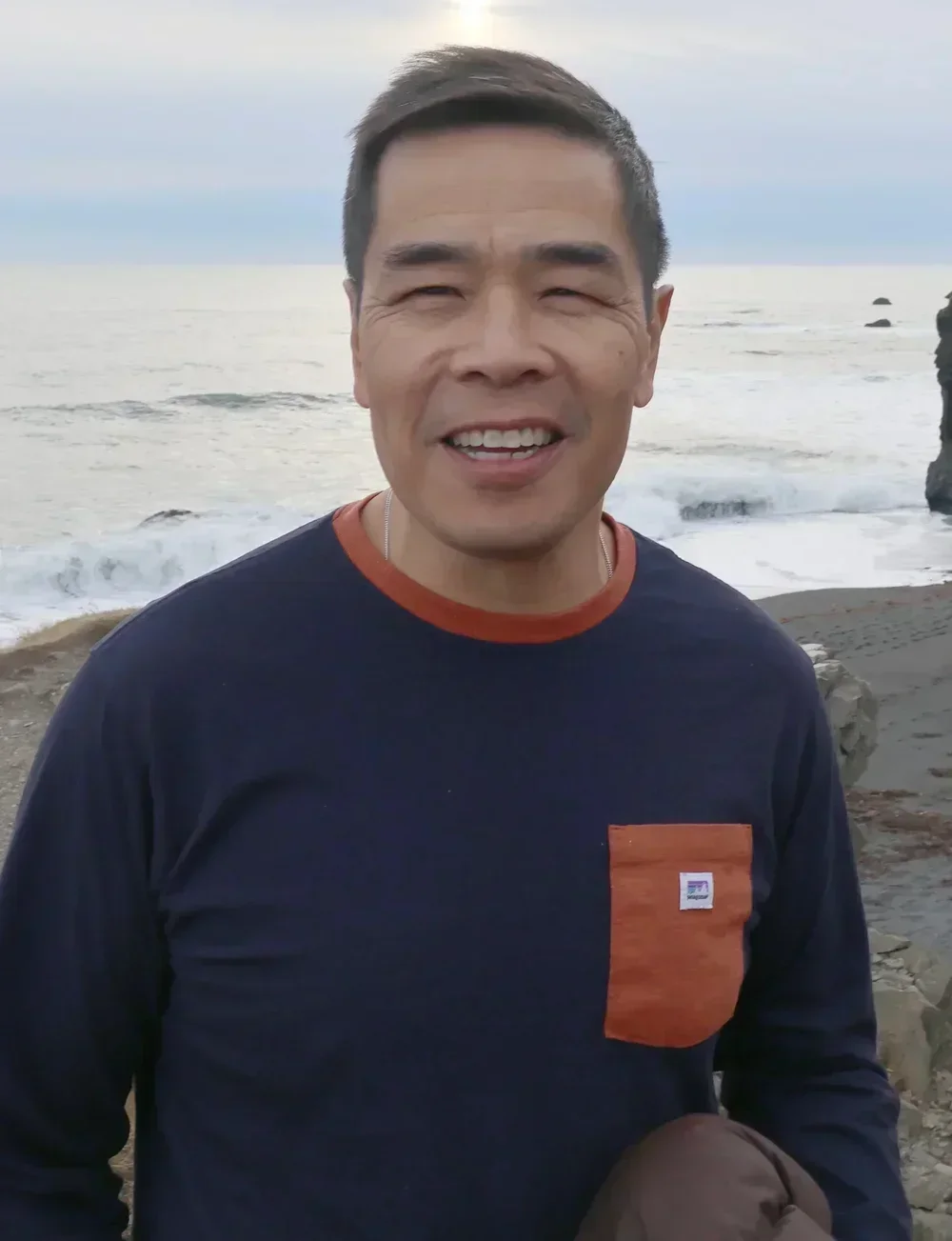
Anthony Maddela is a staff correspondent located in Los Angeles.
More articles from Anthony Maddela



No comments