
When Philippine Independence Day Moved to Another Date
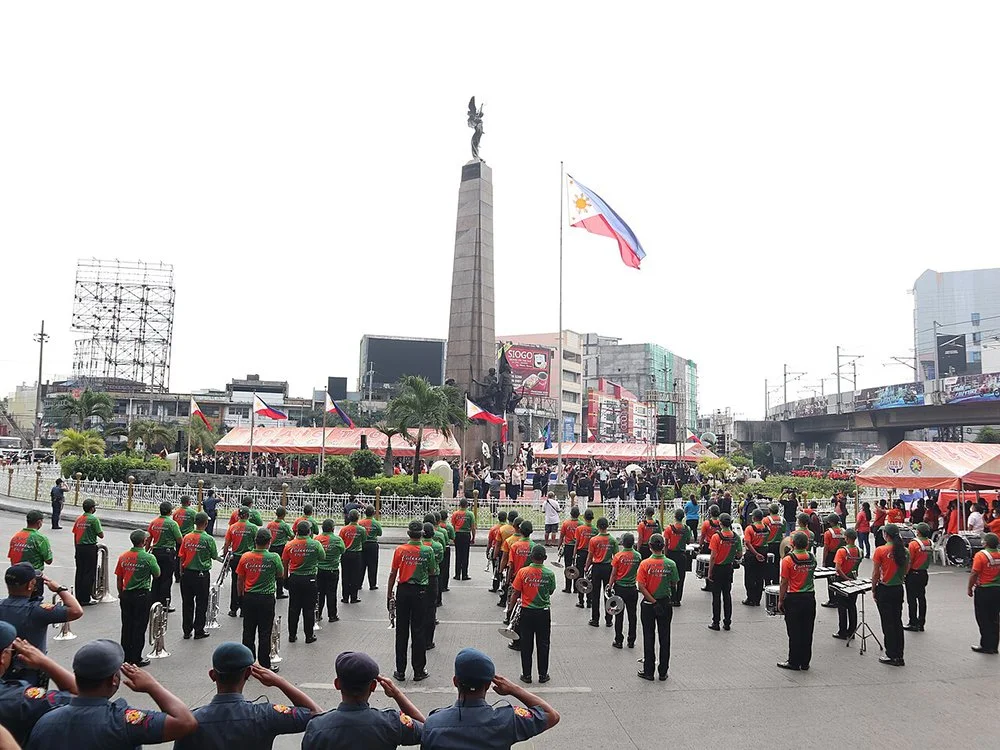
Independence Day ceremonies at EDSA Monumento (Photo by Patrick Roque/Wikipedia)
I was 11 years old in 1962—old enough to notice the change, but too young to understand its significance. At the time, Independence Day was simply Independence Day. It was a holiday. A flag. A speech. A parade. The date on the calendar changed, and life went on.
Only later did I realize that the change reflected a deeper question: When did the Filipino people truly become free?
For more than three centuries, Spain ruled the archipelago. The conquest was not maintained by force alone. It was sustained by religion, privilege, and the gradual cultivation of obedience. Generations of Filipinos were born, lived, and died under colonial authority. Many accepted the arrangement as the natural order of things because they knew no other.
Yet liberation began long before the first shot was fired. It began with thought—when educated Filipinos started asking why they were treated as subjects rather than citizens.
The Propaganda Movement was the first great awakening. Through essays, novels, newspapers, and speeches, Filipino intellectuals challenged the assumptions of colonial rule. They demanded reforms, representation, and equality before the law. Men such as Rizal, del Pilar, and Lopez Jaena attempted to persuade Spain that Filipinos deserved dignity as human beings and rights as citizens.
But history often reaches a point when words alone no longer suffice. When reform proved impossible, revolution followed.
The Katipunan emerged from the realization that Spain would not voluntarily surrender its empire. The pen had awakened the national consciousness; the sword would attempt to secure its freedom. Bonifacio's cry was not merely against Spanish rule, but against the very notion that a people should remain subjects in their own land.
By June 12, 1898, that aspiration found expression in Aguinaldo's declaration of independence in Kawit.
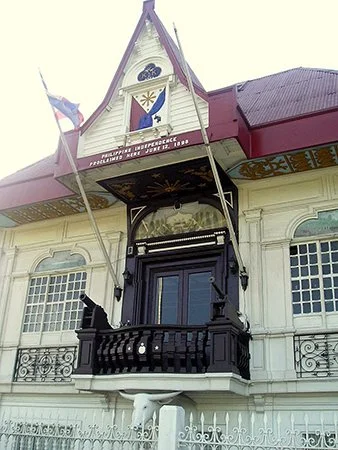
The Aguinaldo Shrine in Kawit, Cavite where Philippine Independence was first declared on June 12, 1898 (Photo by Shubert Ciencia/Wikipedia)
For a brief moment, Filipinos believed they had achieved what generations had dreamed of—freedom. Yet history took another turn.
Spain was defeated by a rising global power whose industrial capacity, military strength, and economic reach far exceeded those of the young Filipino republic. The United States entered the scene as liberator and emerged as the new colonial master.
The Filipino revolutionaries who had fought Spain suddenly found themselves fighting another war—this time against a nation that spoke the language of liberty while denying it to those who had already declared themselves free.
The irony was profound.
The same nation born from a revolution against colonial rule now imposed its authority on another people seeking that very freedom.
And so the independence proclaimed in 1898 was interrupted.
Nearly half a century later, on July 4, 1946, the United States formally granted independence to the Philippines. It was a significant event, but one that carried an uncomfortable implication. Freedom appeared not as something won through the sacrifices of generations of Filipinos, but as something bestowed by a more powerful nation.
A gift. That word has always troubled me.
No people struggling for centuries to govern themselves should have their freedom described as a gift.
The propagandists who challenged Spain, the revolutionaries who took up arms, and the countless unnamed Filipinos who endured prison, exile, torture, and death did not struggle so that independence could one day be handed to them ceremoniously by another power.
They struggled because they believed it already belonged to them. That is why June 12 ultimately prevailed over July 4.
The date does not celebrate a transfer of authority approved by a foreign government. It celebrates the moment Filipinos first declared that sovereignty resided in themselves.
Whether that declaration was premature, incomplete, or later betrayed by the realities of power is another matter. Nations, like people, often require generations to become what they first imagine themselves to be.
Looking back, I can understand why the date changed. June 12 is not merely a remembrance of an event. It is a declaration of ownership over our own history.
I was 11 years old in 1962—old enough to notice the change, but too young to understand its significance.
At 11 years old, I could not have understood any of this. I only knew that Independence Day had moved. It would take years before I realized that behind the shift lay a question that Filipinos continue to ask: Was independence something we were given? Or is it something we have been fighting to complete ever since? Rudy D. Liporada was a feature writing instructor in Zambia, Africa before he moved to the US and became a freelance writer/novelist/columnist ("As the Bamboos Sway"). He graduated from the University of the Philippines, majoring in economics. More articles from Rudy D. Liporada



No comments