
FilAms Among The Remarkable And Famous, Part 80
Filipinos have been in the United States since the 16th century, yet many of their stories remain untold. For the past years, Positively Filipino has been running a series on notable Filipino Americans who have made their marks in this country. There are hundreds, or maybe even thousands more, that need to be added to this story, and we need your help. If you know of a Filipino American who deserves to be included in this line-up, please send us their names and any supporting documents you may have to pfpublisher@yahoo.com. For now, we are including only those who are currently active and visible in the media and the community, regardless of their religious, sexual or political orientation. Thank you.
Christine Sarmiento, Nurse, Candidate for Governor
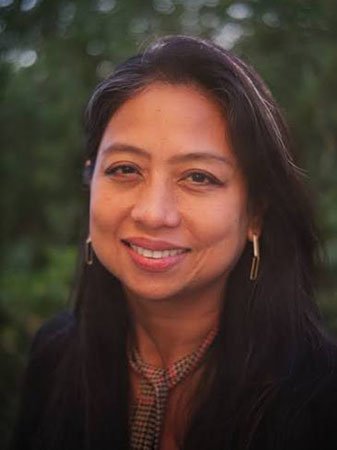
Christine Sarmiento (Source: Facebook)
Sarmiento, a Filipino American public health nurse and operations manager, entered the race for governor of California, positioning herself as an independent candidate focused on affordability, accountability, and community health. Running with no party affiliation, the El Monte–based nurse argues that California’s most urgent challenges are “too important to be filtered through party politics.”
Her candidacy drew heavily on personal experience. Born and raised in poverty in Cavite, a province in the Philippines, Sarmiento was 12 when her mother died. With no adults in the home, she and her siblings—then 13 and 14, raised themselves. She assumed responsibility for managing the household budget, a role she said shaped her discipline and resilience. At 18, she immigrated to the United States and settled in Los Angeles, where she has lived for 25 years. A single mother of two young sons, she earned her registered nurse license in 2010 through Pasadena City College while working full time. She joined her current employer in 2007 and advanced to operations manager, overseeing teams of up to 400 people.
After three and a half years, Sarmiento accepted a permanent position as a public health nurse with the department, serving downtown Los Angeles, where she continues to work.
A first-time candidate, Sarmiento said she is running because she believes California “deserves leadership that has actually lived what everyday Californians are going through.”
“For too long, politicians have promised to speak for the working class—but their words have never matched their actions,” she said. “I have held the hands of scared patients. I have served meals in Skid Row. I have vaccinated children who crossed the border alone. I have sat with families who cannot make ends meet in one of the wealthiest states in the country. California does not need more politicians. It needs leadership that has actually been there.”
Mel Red Recana, Judge
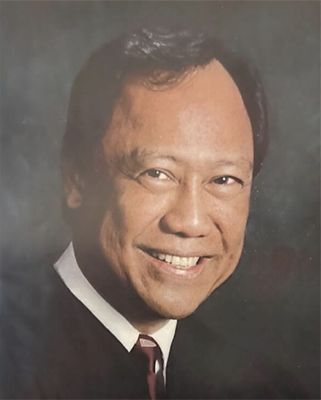
Judge Mel Red Recana (Source: Instagram)
In 1981, Superior Court Judge Mel Red Recana became the first Filipino American appointed as a judge in the U.S. He served on the bench for more than 40 years. Growing up in the Philippines, where he says his father was a town police officer with a third-grade education, Recana was dissuaded by his father from becoming an Army general or an actor. He loved watching movies with jury trials. He completed his pre-law studies at Aquinas University in Legazpi City and earned his Bachelor of Laws degree from the University of the East in Manila. He practiced law in Manila for a few years before moving to California.
In 1974, Judge Recana was admitted to the California Bar. Prior to commencing his judicial career, he was in private practice, except for the period from 1977 to 1980, when he served as a Los Angeles County Deputy District Attorney. He was the first Filipino American to serve as a deputy district attorney. He served on the Municipal Court for more than 18 years. From 1994 to 1995, he served as the Los Angeles Municipal Court Assistant Presiding Judge and Supervising Judge of all civil operations. From 1996 to 1997, he served as the Presiding Judge. In 1999, Judge Recana served as Chair of the Los Angeles County Municipal Court Judges’ Association and President of the California Asian Judges Association.
Judge Recana took temporary leave from the Municipal Court to further his education. In 1993, he earned a master’s in public administration from the Kennedy School of Government at Harvard University. To attend Harvard, he drafted and successfully secured the passage of the Judges’ Sabbatical Leave Act (Gov. Code § 68554), the first statute of its kind in the country. In addition, in 1996, he graduated as valedictorian from the Institute for Court Management at the National Center for State Courts in Virginia. In January 2000, following the unification of the Municipal and Superior Courts, Judge Recana was elevated to the Superior Court. He retired in January 2025.
Julian Recana, Judge
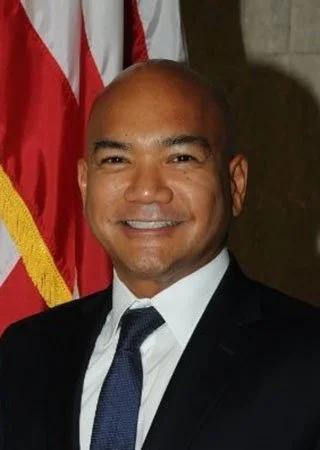
Judge Julian Recana (Source: LinkedIn)
Julian Recana, son of Judge Mel Red Recana, is a judge of the Superior Court of Los Angeles County in California. Governor Jerry Brown appointed him in 2015, and his current term ends on January 8, 2029. He won re-election to the Superior Court of Los Angeles County outright in the primary on June 7, 2022, after the primary and general election were canceled. Recana received a bachelor's degree from the University of California, Berkeley, and a law degree from Loyola Law School in Los Angeles.
"I really do owe everything to him for this one. I really wouldn't be here because of him. He was the big dreamer," said Judge Julian Recana of his father. "He put in the idea that I could also become a judge or become an attorney. I never thought I couldn't be that because I had him as a father."
The Filipino American Lawyers of Orange County (FLOC) honored Judge Julian Recana as the 2025 Judge of the Year at its 8th Annual Gala. “Judge Recana’s commitment to justice, mentorship, and community outreach reflects the mission of FLOC.”
Rafael Bitanga, Storyteller
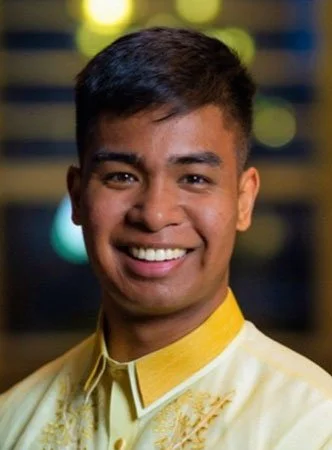
Rafael Bitanga (Source: LinkedIn)
Bitanga is a Filipino Alaskan who empowers youth in rural and under-resourced communities through digital storytelling. After immigrating to Alaska at the age of eight, Rafael confronted Western educational systems that marginalized oral traditions, sparking his passion for alternative pathways to academic achievement and cultural preservation. Discovering filmmaking in middle school, he founded Bitanga Productions in high school to document the stories of underrepresented communities. He graduated magna cum laude from the Cornell University School of Hotel Administration with minors in Education and Leadership.
He works with the nonprofit organization See Stories, implementing digital storytelling curricula in Alaskan schools and reaching more than 6,000 students and educators. The Center for Asian American Media recognized Bitanga’s independent documentary film, Bridging Our Stories, naming him a 2024 Fellow and Pitch Winner funded by the MacArthur Foundation.
He traveled back to the Philippines after living in the U.S. for 15 years to film communities his parents had once called “dangerous.” The experience transformed his understanding of his dual identity and strengthened his commitment to breaking down barriers of fear and misunderstanding. At Stanford University, where he studies Design and Technology, Bitanga wants to develop edtech platforms that integrate visual, oral, and written storytelling to help students document their communities' stories. By honoring diverse knowledge transmission systems, Bitanga transforms classrooms into environments where students learn about their culture, excel academically, and develop a sense of belonging.
Alma Manabat Parker, Health Equity Coordinator

Alma Manabat Parker (Source: Rasmunson Foundation)
As a first-generation immigrant and longtime resident of Ketchikan, Alaska, where she has lived for more than 40 years, Parker has experienced the struggle of embracing her Filipino identity and cultural heritage while still yearning for acceptance by non-Filipinos. She uses the art of folk dance and music to create connections between Filipino elders and young people. Parker hopes to revitalize a once vibrant and prominent local cultural dance group in Ketchikan to amplify multicultural influences and create a positive sense of belonging.
Parker is active in Ketchikan’s dance community as head coach of the Ketchikan High School Dance Team, as well as head instructor and owner of studioMAX, a local dance and fitness studio. By adding Filipino folk-dance instruction to her repertoire, she diversifies her training, allowing more students to have a wider variety of dance opportunities within their community.
“My mom also encouraged us to connect to our roots by sending us to weekly Filipino folk-dance practices on Sundays. This is where we would learn traditional dances with fellow Filipino youth. We would practice, then perform at our local church, for the Fourth of July, and at other special events throughout the year. This was the time when you could really feel a vibrant and strong Filipino presence in the community—a stronger sense of belonging and cultural pride!”
In 2021, she was recruited as the health equity coordinator to help Filipino Alaskans improve their health care and access to health services. “Health equity is culture. Culture is our medicine. We need it to feed us, to teach us, to bring health to our whole beings.”
Leorey Saligan, Vice Dean of Research and Professor
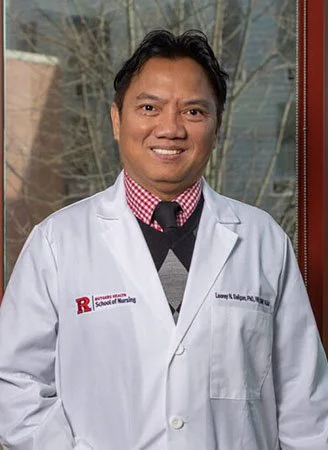
Dr. Leorey Saligan (Source: Rutgers School of Nursing)
In 2026, Dr. Saligan was inducted into Sigma’s International Nurse Researcher Hall of Fame, which recognizes individuals whose contributions demonstrate not only academic excellence but also sustained influence on health care systems and patient care globally. For Dr. Saligan, this induction represents the culmination of more than three decades of work that has consistently pushed the boundaries of what nursing research can achieve.
Currently serving as Vice Dean of Research and Professor at the Rutgers School of Nursing, Dr. Saligan has built a career that bridges clinical practice and advanced scientific inquiry. His research is anchored in biobehavioral and omics integration, an emerging field that examines how biological, behavioral, and environmental factors interact to influence health outcomes.
This focus has positioned him at the forefront of symptom science, particularly in understanding complex and often underrecognized conditions such as fatigue, pain, and cognitive dysfunction. Through more than 150 peer-reviewed publications, he has contributed to a growing body of evidence that informs both clinical decision-making and patient-centered care.
Dr. Saligan’s journey began in the Philippines, where he completed his undergraduate education in nursing and medical technology. In the U.S., he earned his master’s and doctoral degrees at Hampton University. As a Filipino American nurse researcher, Dr. Saligan’s induction into the Hall of Fame carries symbolic weight. It challenges longstanding perceptions that position Filipino nurses primarily in clinical roles and highlights their growing presence in research leadership. In doing so, he opens pathways for future generations of Filipino nurses to pursue careers in science, academia, and innovation to transform care. And for Filipino nurses worldwide, it is a source of pride and inspiration—a testament to what is possible when expertise, perseverance, and purpose align.
Eleanor Valentin, U.S. Navy Admiral
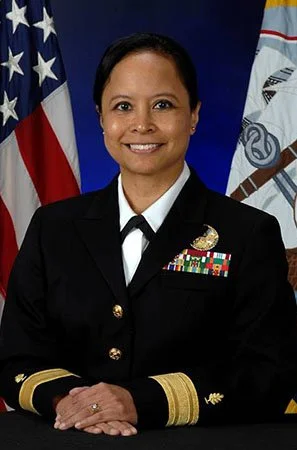
Rear Adm. Eleanor Valentin (Source: Wikipedia)
Rear Admiral Eleanor V. Valentin, U.S. Navy (Ret.), was nominated in 2009 to the rank of Rear Admiral and became the 16th Director of the Medical Service Corps, making her the first female Medical Service Corps officer to attain flag rank, as well as the first woman to serve as Director of the Navy Medical Service Corps. She was the second Filipino American woman to achieve the rank of Rear Admiral.
Valentin is a native of Seattle. After receiving bachelor's degrees in Zoology and Psychology from the University of Washington, she completed a Master of Public Health degree in Health Policy and Planning and a Master of Science degree in Public Health (Biostatistics) at the University of Hawaii.
Valentin has achieved fellow status in the American College of Healthcare Executives and the Academy of Healthcare Management. Her personal decorations include the Defense Superior Service Medal, the Legion of Merit (three awards), the Defense Meritorious Service Medal, the Meritorious Service Medal (three awards), the Navy and Marine Corps Commendation Medal (three awards), and the Navy and Marine Corps Achievement Medal.
John Estalilla, Entrepreneur and Civic Leader

John Estalilla (Source: City of San Mateo)
Estalilla is an entrepreneur, civic leader, and creative economy advocate serving District 2 on the San Mateo County Arts Commission. He brings more than two decades of leadership experience to advancing cultural equity, elevating diverse voices, and strengthening community connections through the arts.
As founder of Sfventures, he has spent his career at the intersection of global media, technology, and human-centered design. His work includes leadership roles at Amazon, Hearst, and Federated Media, where he helped shape brand and video strategy during the rise of the creator economy. He is dedicated to ensuring that all San Mateo County residents have access to meaningful, high-quality arts experiences. Estalilla is a graduate of San Francisco State University and an alumnus of the Stanford Graduate School of Business.
Chris Johnson, Football Player

Chris Johnson (Source: Facebook)
Professional football cornerback Johnson was selected by the Miami Dolphins with the 27th overall pick in the 2026 NFL Draft, making history as the first Filipino American selected in the first round. The San Diego State standout became one of the highest-drafted Filipino American players in NFL history, continuing a legacy that includes Roman Gabriel, the 1969 NFL MVP, and Tyler Allgeier. Johnson’s rise followed an impressive college career that earned him All-American honors and recognition as one of the top defensive backs in the country. Another huge win for Filipino representation in sports.
Rosel Joy Sison Dalisay, Special Education Teacher

Rosel Joy Sison Dalisay (Source: Global Filipino Magazine/Facebook)
Dalisay teaches special education at Crow Agency Public School in Montana, a campus situated within the Crow Reservation, one of the largest Native American reservations in the United States. In 2026, she received the Rising Star Award before an international gathering of special education professionals at the Council for Exceptional Children (CEC) Convention and Expo. The award recognizes emerging leaders in special education who demonstrate outstanding promise and contributions to the field.
Her presentation, “Building Relationships as the Foundation of Behavior Management,” details a philosophy she developed not from theory alone but from daily practice with students whose behavioral challenges often had roots far deeper than the classroom.
“Before addressing behavior, I focus on building trust and understanding each student’s background, emotions, and needs,” she explains. “This means spending time listening, being consistent, and showing students that they are seen and valued.”
Her message to Filipino educators considering a similar path is less about logistics than about identity. “Never underestimate the value of what you bring to the world. Our strength lies not only in our skills but in our heart—our malasakit (genuine concern for others) and pagmamahal sa bata (love for children),” two Filipino concepts that are the very foundation of her teaching and the reason a student in Montana began to trust, participate, and grow.



No comments