
From Death Row to Freedom: Mary Jane Veloso’s Long Road Home
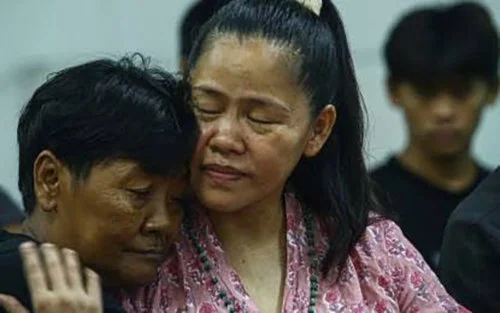
Mary Jane Veloso (Source: Philippine News Agency)
From being a Filipino migrant worker arrested in Indonesia, to becoming a death-row prisoner who came within hours of being executed by firing squad, Veloso has spent more than 15 years living under the shadow of a sentence that could have ended her life.
Now, that chapter is finally coming to an end.
President Ferdinand Marcos Jr. has signed an absolute pardon for Veloso, saying on September 25 that he had signed the pardon the previous day. The clemency gives her a clean slate and opens the way for her release from Philippine custody.
But Veloso’s story did not begin in a presidential palace. It began with a poor Filipino woman looking for work.
In 2010, Veloso traveled to Indonesia after being offered an overseas employment opportunity. She was arrested at the Yogyakarta airport after Indonesian authorities discovered approximately 2.6 kilograms of heroin hidden in her luggage. She was subsequently convicted of drug trafficking and sentenced to death by firing squad.
Veloso has consistently maintained that she did not know the drugs were inside the suitcase and that she had been deceived by people who recruited her for work abroad.
Philippine authorities identified her alleged recruiters as Maria Cristina Sergio and Julius Lacanilao and charged them with qualified human trafficking, illegal recruitment and estafa. Philippine prosecutors regarded Veloso as an important witness and asked Indonesia to suspend her execution so that she could provide testimony.
Then came April 29, 2015.
Veloso was already facing execution when, at the last minute, Indonesian authorities granted a reprieve. The development followed the surrender of her alleged recruiter in the Philippines and the Philippine government’s request that Veloso be allowed to testify. The reprieve came so close to the scheduled execution that some newspapers had already mistakenly reported that she had been executed.

Mary Jane Veloso on the day of her repatriation in 2024 (SOurce: Bureau of Corrections Public Information Office - Bureau of Corrections Public Information Office/Wikipedia)
For years afterward, Veloso remained in an Indonesian prison.
Her case became a symbol of the vulnerability of overseas Filipino workers and of the dangers faced by migrant workers who can be exploited by human-trafficking networks. Human-rights advocates and her family repeatedly argued that she should be treated not simply as a convicted drug offender, but also in light of her claim that she had been used as an unwitting drug courier.
The diplomatic effort to bring her home continued through successive Philippine administrations.
In 2022, Marcos raised Veloso’s case during his meeting with Indonesian President Joko Widodo. Then, in December 2024, after years of negotiations, Indonesia and the Philippines reached an arrangement allowing Veloso to return to the Philippines to serve the remainder of her sentence. She arrived home on December 18, 2024, after spending nearly 15 years in Indonesian custody.
But coming home was not the same as being free.
Veloso was transferred to the Correctional Institution for Women in Mandaluyong, where she remained incarcerated while her family and supporters continued to seek executive clemency.
That final hurdle has now been crossed.
President Aquino negotiated for her reprieve; President Duterte gave the go-signal for execution; President Marcos Jr. brought her back to PH before giving her absolute pardon.
Marcos’ pardon means that the woman who once waited for a firing squad in an Indonesian prison is no longer facing imprisonment in the Philippines. Her story therefore comes full circle: from death row convict to reprieved prisoner, to repatriated inmate, and now—finally—to freedom. Whatever one’s view of the circumstances surrounding her conviction, Mary Jane Veloso’s case has raised enduring questions about migrant-worker vulnerability, human trafficking, due process, and the enormous consequences of being caught in an international drug case. For her, however, the immediate question is much simpler. After more than 15 years behind bars, she gets to go home—not merely to the Philippines, but to a life beyond prison walls. Rene Astudillo is a writer, book author and blogger and has recently retired from more than two decades of nonprofit community work in the Bay Area. He spends his time between California and the Philippines. More articles from Rene Astudillo




No comments