
Little Manila: Filipinos Bite a Piece of the Big Apple
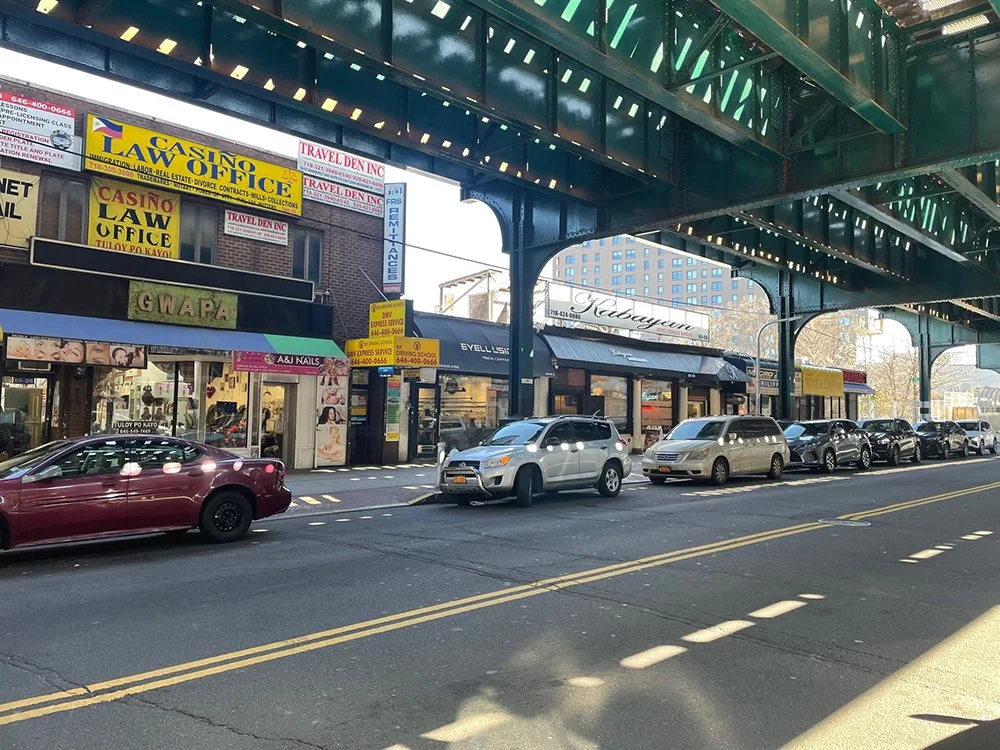
a block of Little Manila, filled with Filipino business establishments (Photo by littlemanilapark.com)
Along an eight-block stretch of Roosevelt Avenue, the aromas of traditional Filipino dishes linger from Kabayan restaurant. Customers gather at Phil-Am Food Mart, converse with employees in Tagalog, and leave with bags of Filipino staples. This area, packed with Filipino culture, is known as “Little Manila.”
Little Manila is more than a street filled with businesses and restaurants. For many Filipino immigrants and Filipino Americans, it not only cures homesickness and strengthens cultural connections, it also is a community. With a population of over 50,000 Filipinos in surrounding neighborhoods, it makes New York City feel a little more like home.
The community dates back to the 1970s, when New York City hospitals recruited nurses from the Philippines, who brought their families and their culture with them. Many Filipinos resided in parts of Queens and quickly surrounded the streets with pieces of their culture. The street was officially recognized as Little Manila Avenue in 2021, with street signs solidifying the name in 2022.
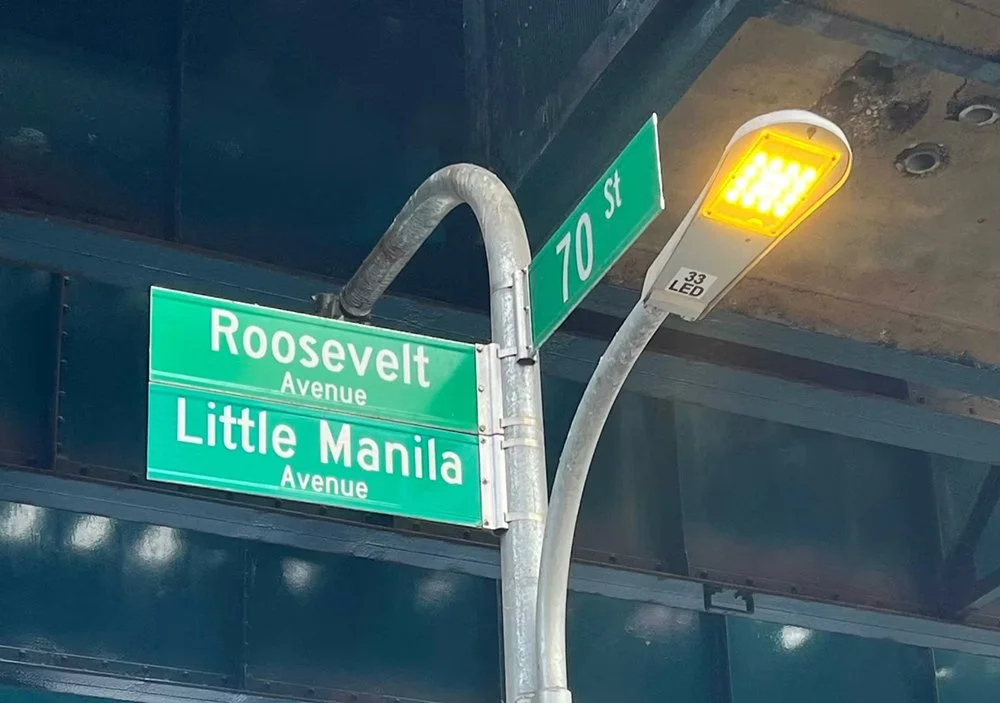
Little Manila Avenue official street sign that was established in 2022 (Photo by Rose Anne Cox-Peralta/1010wins)
“Once you come here, it’s like pure gold,” said 24-year-old Ken Gurdien who co-runs Amazing Grace Grocery convenience store in Little Manila. “The restaurants smell like the carinderias in the Philippines,” he said, referring to food stalls commonly found lining the streets of the Philippines.
Gurdien’s family immigrated to the U.S. in 2022, while Gurdien stayed behind in the Philippines. “I had my own dreams, and I wanted to stay in the Philippines to continue pursuing my band,” he said. Unfortunately, the COVID-19 pandemic forced Gurdien to change his plans. He then joined his family in the U.S. and soon after started his store in 2024 with his pastor, who wanted to connect Filipino communities through the business.
Today, they have reached not only Filipinos from different areas, but also customers from other ethnicities. “They really like the vibes and people here,” said Gurdien.
Kabayan, a nearby restaurant, serves mostly regulars, along with a growing number of people from other backgrounds. “We get mostly Filipino customers but also a lot of Spanish because they really like our bulalo–a soup with beef and bone marrow,” said Bea Manuel, a server at Kabayan, her mom and aunt’s restaurant. The restaurant has only been open for three to four years but is already well established in the community.
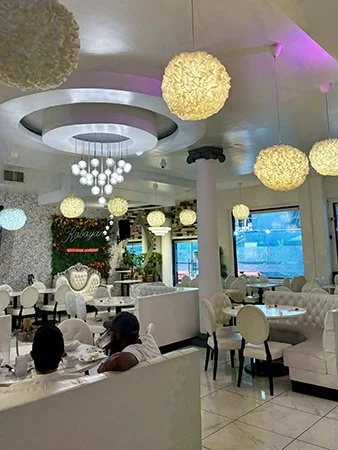
Diners at Kabayan restaurant in Little Manila (Photo by Sophie Festejo)
“When customers come in, I already know them,” said Manuel, “We know them by name, by face, and they know us by name.”
Little Manila has grown into a tight-knit community. “It really is a small world,” Gurdien said. “If you come and see this guy here, and then you go somewhere else, you’re going to see that guy again.”
Often, customers casually ask for items in Tagalog in convenience stores, and restaurant servers already know their usual orders, as if they were back home in the Philippines. Lani, whose last name was not shared, lives in Maspeth, Queens, and travels often to Little Manila for her groceries and the restaurants.
Most of the businesses are family-owned, and their owners hope to preserve Philippine culture in Little Manila for generations. Ida Castillo, 76, and her husband Emmanuel Castillo, 77, have run Phil-Am Food Mart together, a common spot for Filipino groceries, for 51 years. Mr. Castillo quit studying engineering to run the store and took over the family business. “Hopefully our son will take over when we retire,” said Mrs. Castillo.
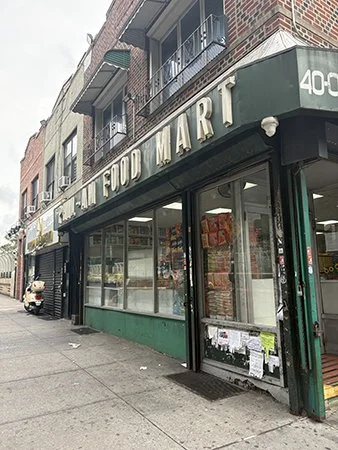
Phil-Am Food Mart on Roosevelt Avenue, beside the Little Manila Avenue street sign (Photo by Sophie Festejo)
The store was initially located between 69th and 70th streets and moved to its current location in 1980, when the owner of the building asked whether the Castillos wanted to buy it. “He assumed the mortgage because I said we do not have money yet,” said Mrs. Castillo.
Since then, the couple has built a special store where customers are surrounded by Philippine culture. They offer a variety of authentic products–in fact, the couple estimates that 95 percent are supplied from the Philippines–and homemade prepared foods.
Phil-Am Food Mart also has an all-Filipino staff and maintains a close-knit work environment, as some have worked there for as long as 40 years. “We are like a family,” said Mrs. Castillo.
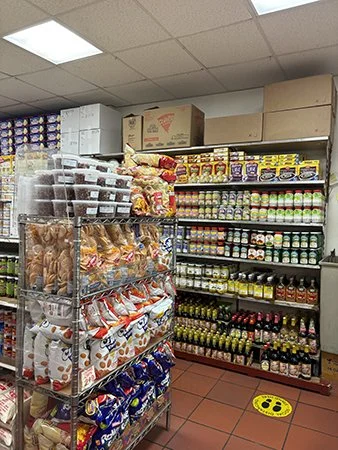
Shelves stocked with Filipino snacks and ingredients at Phil-Am Food Mart (Photo by Sophie Festejo)
Little Manila is the ideal location for Filipino businesses such as Phil-Am Food Mart, Mr. Castillo said, because “there are many Filipinos in Elmhurst, Jackson Heights.”
Many Filipino locals and business owners travel across regions to come to Little Manila. Gurdien commutes daily from Jersey City, a trip that can reach up to two hours, to run his convenience store. Meanwhile, the Castillos travel from Bayside, Queens. Imelda Cabinlan, a Filipino local, comes once a week for groceries and to eat Filipino food with her loved ones.
This area, alongside the diverse Jackson Heights, is home to many Filipino business establishments and residents, preserving Philippine culture and traditions in New York City.
Filipinos across the tri-state area regularly come to Little Manila when they are feeling homesick. It's not just an area with Filipino establishments, but a deeply tied community where traditions, language, and familiarity come together to preserve Philippine culture. Business owners hope to spread Filipino hospitality and community through their stores on Little Manila Avenue for generations to come. “Working here really brings me back to the Philippines,” said Gurdien, smiling. Sophie Festejo is a junior at Summit High School, based in New Jersey, and staff writer for The Verve, Summit High School’s newspaper. She enjoys writing feature articles centered around community, culture, and people’s everyday experiences.




No comments