
When Waymo Stalls Who You Gonna Call? Pinoy Agents, That’s Who
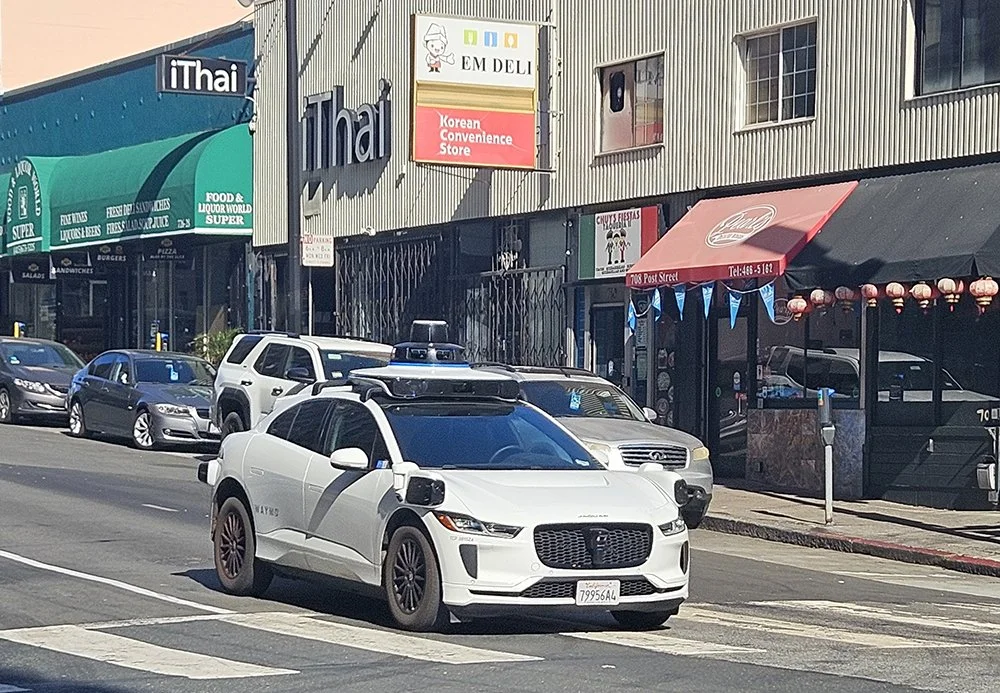
A Waymo autonomous vehicle in San Francisco (Photo by Raymond Virata)
Waymo’s AI drivers say little more than a greeting and a reminder to fasten your seatbelts. The four times I’ve ordered a Waymo in my hometown of Los Angeles, I assumed I was the only Filipino presence in the car. But I could’ve been wrong.
Take Another Sip of Alphabet Soup
Whether we conduct keyword searches on Google, seek information from Gemini AI, save photos in the Google Cloud storage, or view videos on YouTube, we place our trust in Alphabet, the parent company of them all. You might be nervous about downloading the W in the Alphabet galaxy.
One reason you might not think increased dependence on Alphabet brings us a step closer to robot Armageddon is that Waymo places its vehicles and passengers in the mortal hands of Fleet Response Agents in the Philippines. These are not call center representatives chatting with customers. They are Filipinos who guide AI drivers when the machines encounter problems they cannot handle alone. Not all Americans are comfortable with the idea of turning to Filipinos when artificial intelligence is baffled.
A disturbing prejudice surfaced on February 4, 2026, when Ed Markey grilled Dr. Mauricio Peña, Waymo’s Chief Safety Officer, during a Senate Committee on Commerce, Science, and Transportation hearing. The senator expressed anxiety that autonomous vehicles caught in hazardous situations with passengers onboard could end up taking direction from foreigners. The Waymo executive did his best to ease the fears of the 79-year-old Democrat, but Silicon Valley technocracy was no match for a paternal view of Filipinos that stretches back to Douglas MacArthur at Leyte. Some American men still do not like taking advice from their little brothers abroad.
We have the President to thank that late-night television hosts did not spend that evening filling their monologues with jokes about Filipinos advising Waymo robotaxis navigating the streets of Atlanta, Austin, Miami, Phoenix, San Francisco, and Los Angeles. Comedy writers instead had a partial government shutdown and the suppression of Minneapolis protesters to occupy the first fifteen minutes of airtime.
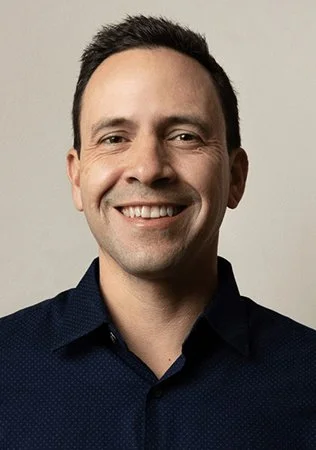
Dr. Mauricio Peña, Waymo Chief Safety Officer (Source: LinkedIn)
What Waymo Says
I contacted Waymo for information about Pinays and Pinoys advising its robotaxis on American roads. Mark Lewis, a public relations manager, replied that the company would not grant me an interview, though he did share materials Waymo has already published on the subject.
To provide what might be called an enlightened perspective—or, if you will, a Waymo-tinted lens for interpreting the company’s disclosures—Lewis wrote: “Our team in the Philippines advises our fully autonomous vehicles when they need help, making them an important element in critical moments.”
What Lewis is essentially saying is that when a Waymo car faces a crisis, a metaphorical searchlight flashes a bat signal shaped like the golden sun on the Philippine flag. Such moments are rare. But when a vehicle gets stuck in a bog, a Filipino will be there to toss the invisible Waymo driver an invisible life preserver. Unless passengers happened to watch footage of the Senate hearing, they would never suspect their robotaxi had sent an SOS to a road savant 7,300 miles away.
Waymo wants you to know:
“Much like phone-a-friend, when the Waymo vehicle encounters a particular situation on the road, the autonomous driver can reach out to a human fleet response agent for additional information to contextualize its environment.”
“The Waymo Driver does not rely solely on the inputs it receives from the fleet response agent (RA) and it is in control of the vehicle at all times.”
“As the Waymo Driver waits for input from fleet response, and even after receiving it, the Waymo Driver continues using available information to inform its decisions.”
Simply put, the robotaxi seeks human input only as a last resort, and even then its AI brain may overrule a mortal’s remedy and instead trust its computer-chip gut instinct. It is like rejecting a second opinion without ever really accepting a first one.
You may not agree that the consequences of human error are necessarily worse than the harm caused by machine mistakes. Still, Waymo’s literature insists that the Waymo Driver performs competently during the ordinary conditions that account for 99.99 percent of its time on the road: “The Waymo Driver autonomously navigates tens of thousands of rider-only miles across San Francisco, Phoenix, Los Angeles, and Austin daily. It can navigate common scenarios, like adhering to a crossing guard directing traffic, as well as unique interactions like avoiding swerving vehicles.”
Filipinos Exonerated
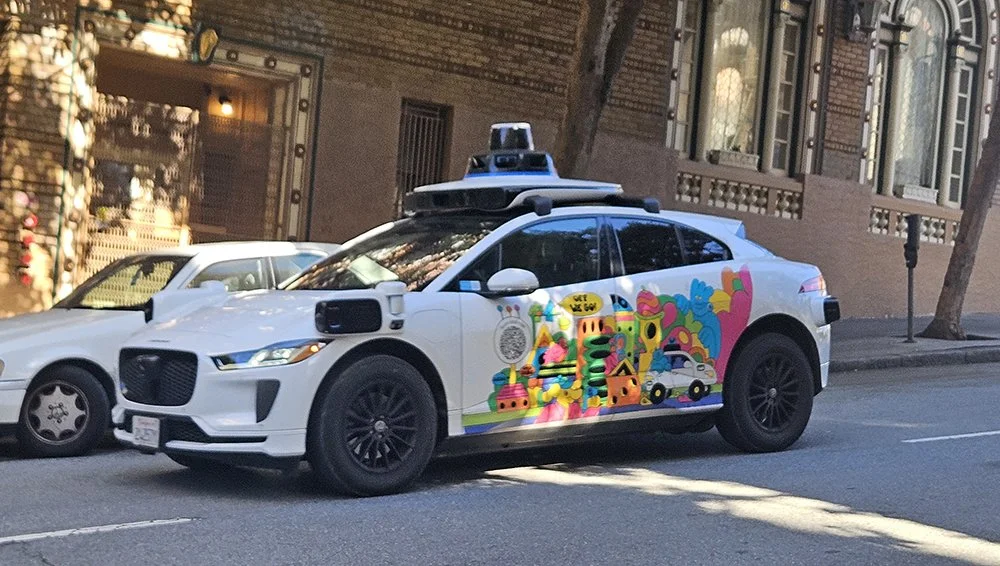
Waymo and creative agency Muros have partnered to provide decorative robotaxis in San Francisco (Photo by Raymond Virata).
Just as everybody loses the lottery except the lucky bloke who wins it, an extremely improbable event has a way of defying the odds. Likewise, the federal hearing was called after a Waymo robotaxi struck a child in Santa Monica. The AI driver didn’t have time to consult an RA agent before the child crossed in front. In some instances, AI drivers must take full responsibility for their actions.
Waymo has highly qualified, heavily screened humans as alternative intelligence when AI loses its way. That is, “All RA agents must have and maintain driver’s licenses and are rigorously vetted, including a comprehensive review of their driving history, thorough criminal background checks, initial and ongoing drug testing, and color blindness and spatial recognition assessments.”
I admit to being an unreliable judge of the prowess of drivers in the Philippines since I have never driven in Manila (or ridden a Jeepney). I give my brothers and sisters in my ancestral homeland the benefit of the doubt. Ghastly scars or survivor stories from past excursions on Quezon Boulevard never come up in my conversations with Philippine immigrants, despite the proclivity of folks to seize every opportunity to initiate Freud’s talking cure to make sense of a mishap they should have prevented.
An Objective Party Weighs In
Now that Waymo has either won your confidence or aggravated your suspicions, it’s time to tackle the proverbial elephant in the room. What about these so-called Filipino “fleet response agents”?
Waymo literature states: “As of February 17, 2026, there are approximately 70 Remote Assistance agents on duty worldwide at any given time.” By “worldwide,” Waymo means the Philippines since that is the only country Dr. Peña referenced in his testimony.
On November 5, 2025, Waymo released findings of an independent audit of the Remote Assistance Program by the safety and testing organization, TÜV SÜD. A summary of the audit reported: “TÜV SÜD conducted a comprehensive review of the program, evaluating the robustness and safety of training and implementation practices, including a multiple-day site visit to observe operations firsthand. The audit confirmed the adherence of Waymo’s policies and practices with the industry best practice on Remote Assistance Use-Cases produced by the AVSC (Automated Vehicle Safety Commission) consortium.”
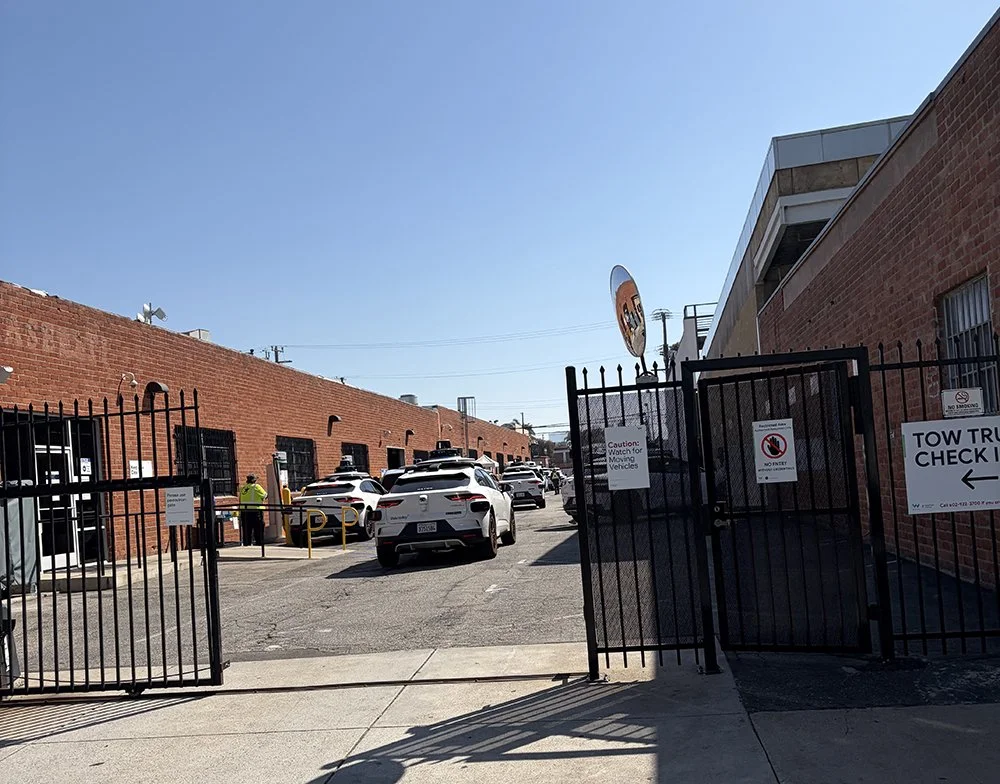
A nondescript Waymo fleet station is located on Westgate Avenue in West Los Angeles (Photo by Anthony Maddela)
The Waymo executive then added some context to the politician’s claim.
“They provide guidance, they do not remotely drive the vehicles,” Peña says. “Waymo asks for guidance in certain situations and gets input, but Waymo is always in charge of the dynamic driving task.”
Markey then asked about where the operators are located, to which Peña says they have "some in the U.S. and some abroad,” however he did not know an exact percentage of those located elsewhere.
After further questioning, the executive revealed that their international remote operators are located in the Philippines.
“Having people overseas influencing American vehicles is a safety issue,” Markey says. “The information the operators receive could be out of date. It could introduce tremendous cyber security vulnerabilities… And let’s not forget Waymo is trying to replace the jobs of hardworking taxi and ride share drivers.”
A Waymo spokesperson tells PEOPLE over the phone that the reason for outsourcing to the Philippines is part of an effort to scale the company globally. He added that these operators, called "fleet response agents," are required to have a passenger car or van license in addition to undergoing regular driving history checks.
The spokesperson emphasized that these agents never drive the vehicle remotely, instead they only provide additional context to the autonomous diving technology, which typically "is able to resolve these situations on its own."
Waymo did not provide statistics regarding how many remote operators are located within the U.S. and abroad.
According to Waymo’s website, the Alphabet-owned company currently operates in six U.S. markets including Atlanta, Los Angeles, Miami, Phoenix, the San Francisco Bay Area and Austin, Tx. The company is looking to expand to other areas like Boston, Dallas, Denver, Las Vegas, Washington, D.C., and even overseas in London.
The hearing comes less than two weeks after a Waymo vehicle hit a child walking to school during drop-off. According to a statement from the company, the incident occurred on Jan. 23, in Santa Monica, Calif.
“The event occurred when the pedestrian suddenly entered the roadway from behind a tall SUV, moving directly into our vehicle's path," the Jan. 28 statement said. "Our technology immediately detected the individual as soon as they began to emerge from behind the stopped vehicle."
In 70 Filipinos We Trust
I end this article with peace of mind that every time I order a Waymo on my phone app, should an emergency arise, one of 70 Filipinos sits at his computer screen ready, able and willing to bring me home.
Should a Waymo emergency arise, one of 70 Filipinos sits at his computer screen ready, able and willing to bring me home.
If Waymo is available in your city, I urge you to take a ride. Fares are comparable to Uber, and AI drivers don’t accept tips. Should you be asked to rate a Waymo ride, a maximum score may sustain the livelihood of a former call center worker who landed the rare job that isn’t about to be displaced by chatbots. While the driver’s seat is off limits, you can tailor the environment to your preferences, even choose the music genre, and a small screen displays silhouettes of pedestrians and line graphics of cars and roadside objects produced by spinning lidar sensors. Waymo’s Filipinos likely have more interesting uses of their time than to watch you stare at your phone, but it wouldn’t hurt to say, “Mabuhay!” before you exit the cab. Don’t be surprised if a speaker whispers, “Salamat.” Anthony Maddela is a staff correspondent who doesn’t just write about subjects; he interviews them. More articles from Anthony Maddela



No comments