
Filipinos in Austria: Rooted in Care, Culture, and Connection

Book reading of Common Diversities with authors and Filipino-Austrian actress Cindy Kurleto at University of Vienna in 2022 (Photo by Ralph Chan)
Establishment of diplomatic relations
Did you know that Austria and the Philippines have maintained diplomatic relations for a very long time? Austrian‑Philippine relations rest on enduring historical friendship, dynamic trade, and deep people‑to‑people connections, especially in healthcare, technology, and international diplomacy. These ties trace their roots to the 19th century, shaped by the remarkable friendship between Dr. José Rizal and the Austrian scholar Ferdinand Blumentritt. Their bond laid the groundwork for the diplomatic relationship that would later be formalized in 1946. In 2026, the two nations commemorate the 80th anniversary of their diplomatic relations, celebrating a partnership strengthened by shared history and sustained by vibrant cooperation.
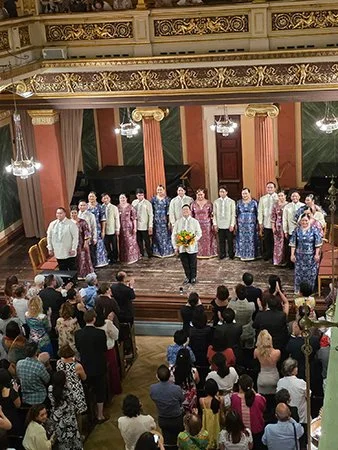
Filipino-Austrian community celebrating with Philippine Madrigal Singers in Vienna (Photo by Ralph Chan)
A Community Built on Care
The history of Filipinos in Austria is, at its core, a story of arrival, work, and community and of a quiet but enduring influence on a country many now simply call home. It is also a story inseparable from Austria’s healthcare system. What today looks like a naturally grown diaspora began with a single political document that reshaped the country’s care sector: the 1973 Recruitment Agreement. In the early 1970s, Austria was grappling with a shortage of trained nurses.
The Philippines, with its English‑speaking, internationally trained workforce, was in the midst of a major labour‑migration phase. The interests of both nations aligned, and a pragmatic agreement set in motion a social chapter that continues to shape Austria. When the first 20 Filipino nurses stepped off a plane in Vienna in 1974 — many on their first journey outside Asia — few could have imagined that they were laying the foundations for one of Austria’s most stable and visible Asian communities. They arrived not only in Vienna, but also in Salzburg and Linz, filling urgent gaps in hospitals and care homes. Their professionalism and adaptability quickly made them indispensable.
Emergence of Filipino Associations
By the 1980s and 1990s, the community had taken root. Many continued to work in healthcare, a field in which Filipinos remain vital today. Their presence in hospitals, care homes, and mobile care services stands as a quiet reminder of how migration can stabilise an entire system. During this period, Vienna emerged as its community’s centre of gravity, where Filipino associations, church groups, and cultural initiatives flourished. Groups such as the Babaylan Austria, the Filipino Catholic Chaplaincy, or the Bikol Society in Austria organised everything from charity drives, empowerment workshops to Christmas Simbang Gabi celebrations. Cultural initiatives also flourished.
The Folklorico Filipino Austria taught traditional dances like tinikling and singkil to children born in Austria since the 1980s. These networks became lifelines for newcomers; a social safety nets and cultural anchors for those who had already settled. These networks helped newcomers find housing, navigate bureaucracy, and feel less alone in a country where winter can be as intimidating as the language. Until today, the Filipino Chaplaincy in Vienna remains a central gathering point. Masses are packed, choir rehearsals spill into potlucks, and charity drives support both local causes and disaster relief back home.

Folklorico Filipino performance at KUBO festival 2023 (Photo by Ralph Chan)
Second-Generation Steps Forward
As the community matured, its influence expanded beyond care work. The 2000s brought another shift. The second-generation children of the pioneer nurses came of age. They attended Austrian schools, entered universities, launched businesses, and carved out careers in the arts and pop culture. Names like Filipino Austrian singers Vincent Bueno, Rose May Alaba and Eurovision Song Contest 2025 winner Johannes "JJ" Pietsch were born. They signaled a new kind of visibility, one that extended far beyond the care sector. They brought Filipino heritage into mainstream music and entertainment. Their success reflects a generation that moves fluidly between identities — Austrian by upbringing, Filipino by heart.

With Filipino-Austrian singer Vincent Bueno, Eurovision Song Contest 2021 representative for Austria (Photo by Ralph Chan)
Furthermore, Filipino scholars, cultural workers, and community leaders began contributing to Austria’s academic and public discourse. University lectures mainly organized by Sentro ng Kultura at Wika ng Austria at Pilipinas/Zentrum für österreichische und philippinische Kultur und Sprachen (Sentro) at the University of Vienna on migration, diaspora studies, and Southeast Asian cultures increasingly featured Filipino perspectives — not only as subjects of study but as voices shaping the conversation.
This intellectual visibility culminated in publications such as Common Diversities 1 - Junge Filipin@s im deutschsprachigen Raum (Castañeda & Chan, 2022) and Common Diversities 2 - Filipino Europeans: Remaking the Past, Shaping the Future (Castañeda & Chan, 2025), which brought Filipino experiences in Austria and Europe into dialogue with broader debates on diversity, belonging, and post‑migration identity. These works marked a shift: the Filipino presence was no longer only lived in hospitals and community halls, but also documented, analysed, and taught in Austrian classrooms.
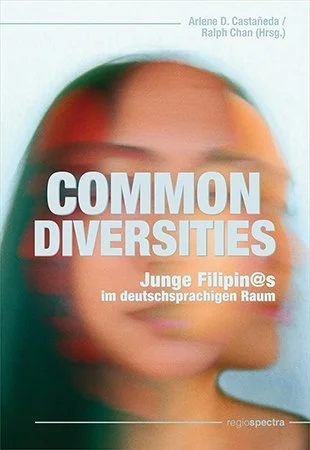
Book Cover Common Diversities 1 (Photo @Sentro)
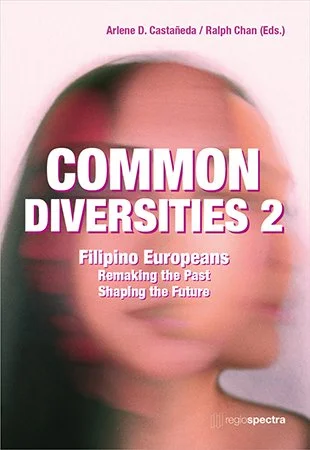
Book Cover Common Diversities 2 (Photo @Sentro)
A Quiet But Powerful Presence
Filipino culture has become a living thread in Austrian society, woven not through grand institutions but through the everyday acts of community that Filipinos carry with them — shared meals, neighbourhood gatherings, faith traditions, and the quiet habit of looking out for one another. Annual fiestas such as Barrio Fiesta bring together hundreds for lechon, tinikling, and artistic performances. Dance troupes perform at multicultural festivals. Filipino restaurants such as Lolo & Lola or Brilli - Hotel am Brillantengrund, Healthy Brunch Club Vienna and bakery shops Puro, Lorelai's Pan serve adobo and halo‑halo their own way to curious Austrian diners. Alongside cultural initiatives and academic work, Filipino‑Austrian groups launched concrete projects that shaped public life:
• The “Philippine Heritage Month” initiative organized exhibitions, film screenings, and panel discussions often spearheaded by the Philippine Embassy in Austria.
• The Filipino food festival, which is usually held at the weekend, brought Filipino cuisine — from adobo to halo‑halo — to Austrian audiences, drawing thousands of visitors.
• ENFiD‑Austria, part of the European Network of the Filipino Diaspora, works to integrate and empower Euro‑Filipinos while promoting human rights, democracy, the SDGs and the Paris Agreement.
• The Wien Museum’s exhibition “Kumain Ka Na?” spotlighted stories, showcasing migration narratives, queer Filipino‑Austrian identities, and the role of food in preserving memory.
• Advocacy groups such as Bund Philippinischer Gesundheitskräfte in Österreich (BPGÖ) collaborated with Austrian NGOs on migrant rights, domestic worker protections, and intercultural dialogue.
These initiatives made Filipino culture visible in public spaces — not only in community halls but in museums, universities, and city festivals. But there are more, several well-known Filipino associations and organisations in Austria include:
• Council of Filipino Associations in Austria (CFAA) - the umbrella organization uniting various Filipino community groups in Austria. The CFAA actively promotes Philippine heritage, culture, and social integration through community events and projects
• Filipino Visual Artists in Austria (FVAA), a plattform that provides Filipino visual artists to showcase their art in Austria
• Halo-Halo network - grew out of an idea to get to know more second-generation Filipinos. The members realised that there were a lot of second-generation Filipinos, but that they were all scattered far and wide. Until then, they had no shared space, either online or offline, where they could come together.
• Kulay - a Filpino LGBTQ+ organisation based in vienna.
• Migrante Austria, an NGO working to unite and strengthen ties to advance Filipino migrants’ and refugees’ rights in the region and to support the broader struggle for social and national liberation in the Motherland.
• Philippine-Austrian Cultural and Educational Society (PACES), an association of like-minded members of the Philippine-Austrian community who believe in promoting the study of science and technology as a vehicle for development and progress.
• Philippine Nurses Association in Austria (PNA-Austria) is to promote professional growth towards the attainment of highest standards of nursing and to create a vision of an empowered professional association responsive and committed to health care and development for the well-being of nurses and the society.
• Rambak Austria, an Association for the Promotion of Indigenous Filipino Culture in Austria
• sige!. The association has three main objectives: networking, raising awareness and promoting the many art forms practised by Filipinos both at home and abroad.
Despite the relatively small numbers, Filipinos have become one of Austria’s most integrated migrant communities. Their contributions — especially in healthcare — are woven into the country’s daily life. What stands out most is the way they’ve recreated a sense of home thousands of kilometers away. Yet research also shows that integration experiences vary widely, shaped by factors such as residence status, language skills, and the demands of integration agreements. Today, around 30,000 Filipinos live in Austria. Many are part of bicultural families; many arrived through marriage; many continue to work in care. But all are part of a community whose story began with a labour agreement and grew into something far more profound: a lasting contribution to Austria’s social fabric.

Ralph Chan is a sociologist and conducts research—both academically and out of personal interest—on the Philippines, Filipinos, and the Filipino community in Austria. He hosted Sentro’s webinar and podcast series “Euro-Pinoy Talk”, is a co-editor of the anthologies Common Diversities 1 & 2, serves as Country Editor for Austria at the Euro-Pinoy online magazine Roots & Wings, and is one of the co-founders of the Halo-Halo Network.



No comments